

Key Summary
- Medical records outsourcing has evolved from basic back-office support to a strategic capability for healthcare organizations.
- Leading medical records outsourcing companies now deliver secure, compliant, and technology-enabled teams that improve data quality, turnaround time, and operational control.
- The most effective providers combine trained health information professionals, embedded workflows, and strong governance frameworks.
- The future of medical records outsourcing belongs to partners that integrate people, process, and intelligent automation without compromising compliance or patient trust.
Introduction: The Rise of Medical Records Outsourcing
As the healthcare industry continues to develop effective solutions to improve service quality, the adoption of electronic medical records has become a key strategy for increasing efficiency and streamlining workflows.
However, if not implemented properly, this solution can lead to additional challenges. Because medical teams require quick and secure access to protected health information (PHI) and personally identifiable information (PII), managing these records can become time-consuming, costly, and labor-intensive.
This is where medical records outsourcing comes into play. This strategic solution allows you and your medical team to focus on higher-priority responsibilities while entrusting record management to a reliable service provider.
Why Medical Records Outsourcing Is Growing Rapidly
Medical records teams are responsible for some of the most critical operational functions in healthcare, including:
- chart abstraction and indexing
- release of information (ROI) processing
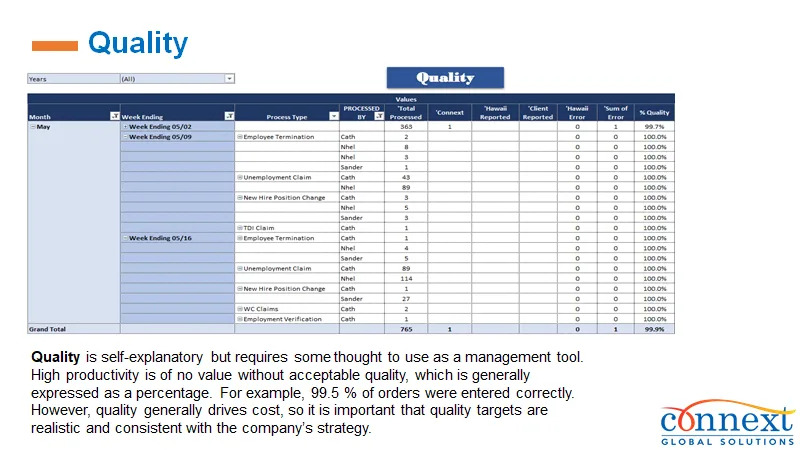
- quality checks and audits
- clinical documentation support
- backlog reduction and historical chart conversion
As documentation requirements become more complex, healthcare organizations increasingly outsource to:
- expand capacity without recruiting locally
- stabilize turnaround times during demand spikes
- improve data accuracy and audit readiness
- protect clinical staff time for patient care
However, not all outsourcing providers are built to support regulated, data-intensive healthcare workflows.
What to Look for in a Medical Records Outsourcing Company
Before selecting a partner, healthcare leaders should evaluate whether a provider offers:
- healthcare-trained professionals
- HIPAA-aligned security and data governance
- embedded workflows inside the client’s systems
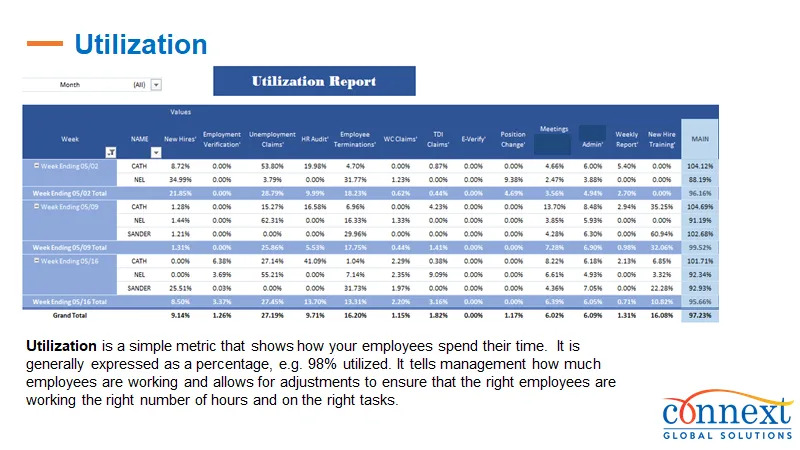
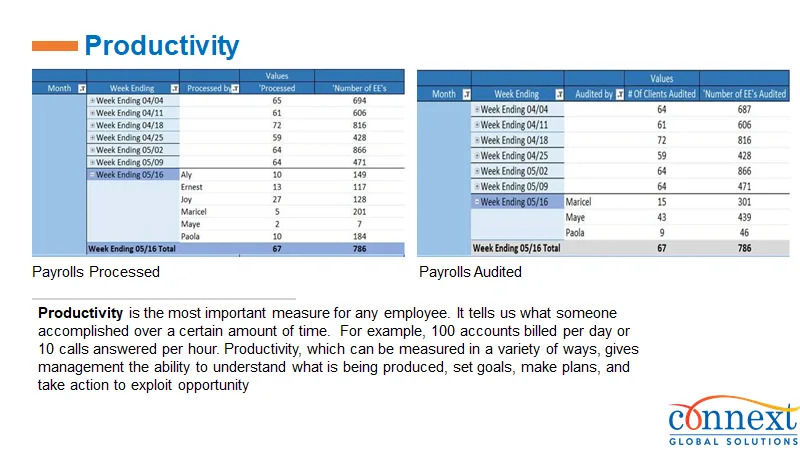
- transparent staffing and performance oversight
- scalable delivery across time zones
The companies below are widely recognized for delivering structured, compliant medical records outsourcing services.
Leading Medical Records Outsourcing Companies
1. Connext Global Solutions
Connext provides dedicated offshore medical records and healthcare operations teams through a staffing and Employer of Record (EOR) model.
Rather than operating pooled delivery teams, Connext builds long-term, embedded healthcare support teams that work directly inside a client’s tools, systems, and workflows.
Key strengths
- healthcare-trained medical records and HIM professionals
- embedded staffing model with direct client control
- SOC 2 and HIPAA-aligned security practices
- co-management structure for operational oversight
- scalable teams across the Philippines, Colombia, Mexico, and India
This approach allows healthcare organizations to maintain full visibility, performance accountability, and governance while expanding medical records operations.
2. Cloudstaff
Cloudstaff delivers offshore staffing solutions for healthcare and administrative functions, including medical records support roles.
Their model focuses on providing dedicated professionals aligned to client operations, with infrastructure and compliance support managed by the provider.
Key strengths
- large offshore workforce in the Philippines
- dedicated staffing approach
- modern facilities and IT infrastructure
- support for healthcare administrative and documentation roles
Cloudstaff is often selected by healthcare organizations seeking rapid scale and standardized offshore staffing environments.
3. EMAPTA
EMAPTA offers custom offshore staffing services that include healthcare operations and medical documentation support.
Their delivery model centers on building exclusive teams for each client rather than shared delivery pools.
Key strengths
- client-dedicated teams
- healthcare administrative staffing experience
- flexible team structures
- strong local recruitment capability in the Philippines
EMAPTA is commonly used by healthcare providers and vendors seeking tailored offshore team builds.
4. Solvo Global
Solvo Global provides nearshore staffing solutions across Latin America, including healthcare back-office and records-related support functions.
Their geographic proximity and cultural alignment are often attractive to U.S. healthcare organizations.
Key strengths
- nearshore delivery in Latin America
- bilingual staffing capabilities
- healthcare operations and documentation support
- strong regional recruiting networks
Solvo is frequently selected for organizations prioritizing time-zone alignment and nearshore collaboration.
5. Flatworld Solutions
Flatworld Solutions is a long-standing outsourcing provider offering medical records outsourcing and health information management services.
Their services include medical data processing, indexing, and chart management support.
Key strengths
- broad healthcare outsourcing portfolio
- long operating history in medical data services
- structured delivery processes
- support for multiple healthcare documentation workflows
Flatworld is often used by healthcare organizations looking for traditional project-based or managed services engagement models.
Why Staffing-Based Medical Records Outsourcing Is Gaining Preference
Many healthcare organizations are shifting away from traditional project-based outsourcing toward embedded staffing models.
In a staffing and EOR structure:
- medical records professionals operate inside the provider’s EHR and document management systems
- internal leaders retain ownership of workflows and quality standards
- performance metrics remain directly controlled by the healthcare organization
- teams develop institutional knowledge over time
This model supports higher accuracy, lower rework rates, and stronger continuity compared to transactional delivery arrangements.
Security, Compliance, and Governance Remain Non-Negotiable
Medical records outsourcing requires strict safeguards around:
- protected health information (PHI)
- role-based system access
- secure connectivity and infrastructure
- documented operational controls
- continuous compliance monitoring
The strongest providers design their delivery model around healthcare regulatory requirements rather than retrofitting generic outsourcing platforms.
Human Expertise Still Drives Medical Records Quality
While automation and AI-assisted tools help accelerate indexing, classification, and document routing, medical records operations still depend on human professionals for:
- clinical interpretation
- exception handling
- quality validation
- regulatory judgment
- communication with internal stakeholders
High-performing medical records outsourcing companies invest heavily in healthcare-trained professionals rather than relying solely on automation.
Global Talent, Smarter Processes, Better Healthcare Outcomes
With offshore and nearshore delivery centers in regions such as the Philippines, Colombia, Mexico, and India, modern medical records outsourcing providers now offer:
- round-the-clock processing coverage
- multilingual documentation support
- faster backlog resolution
- scalable healthcare operations capacity
This enables healthcare organizations to improve record availability and operational efficiency without overextending internal teams.
The Future of Medical Records Outsourcing Is Embedded and Human-Led
The next generation of medical records outsourcing is not built on task hand-offs.
It is built on long-term, integrated teams that combine:
- healthcare domain expertise
- secure infrastructure
- standardized workflows
- and intelligent automation tools
Technology accelerates output, but people protect accuracy, compliance, and patient trust.
Choose a Partner, Choose Connext
The top medical records outsourcing companies differentiate themselves not by price alone, but by their ability to deliver secure, scalable, and accountable operations.
Healthcare organizations that succeed will be those that:
- invest in specialized medical records talent
- embed teams into their operational environment
- maintain control over data and performance
- build long-term workforce partnerships
If your organization is evaluating how to strengthen medical records operations without increasing internal burden, outsourcing can be a strategic growth enabler when executed correctly.
Connext delivers medical records outsourcing through a staffing and Employer of Record model that allows healthcare organizations to retain full operational control while offloading recruitment, HR, payroll, and local compliance management.
By building dedicated offshore medical records teams, Connext enables providers to scale documentation and health information management operations securely and efficiently.
A co-management model further strengthens outcomes by aligning client leadership with Connext’s operational experts to maintain quality, productivity, and compliance on a daily basis.
This structure allows healthcare organizations to expand medical records capacity, improve turnaround times, and maintain governance while supporting long-term growth.
Frequently Asked Questions (FAQ)
Common services include chart abstraction, document indexing, ROI processing, quality audits, and historical chart conversion.
It can be, provided the outsourcing company follows healthcare security standards, access controls, and governance practices aligned to HIPAA requirements.
Yes. Embedded staffing models allow offshore professionals to operate directly inside client systems with proper access controls.
Staffing models often provide better continuity, institutional knowledge, and quality control for ongoing medical records operations.
Yes. Outsourcing enables smaller organizations to access trained medical records professionals and scalable capacity without large internal hiring investments.
Initial teams can often be launched within weeks, depending on role requirements, access approvals, and onboarding readiness.
Not always, but healthcare documentation and HIM training significantly improves accuracy and compliance outcomes.
Yes. Dedicated medical records teams are commonly used to stabilize and eliminate backlogs without disrupting daily operations.
Through secure infrastructure, role-based access, monitored environments, and documented data governance controls.
Organizations should assess healthcare expertise, compliance practices, delivery structure, transparency, and long-term scalability before selecting a partner.